From Coffee Cherry to Coffee Bean: The Journey Behind Every Cup
Every cup of coffee begins long before the beans reach a roaster. What we call a "coffee bean" is actually the seed of a fruit known as the coffee cherry. Growing, harvesting, and processing coffee is a meticulous agricultural process that can take several years before the first harvest is even possible.

Every cup of coffee begins long before the beans reach a roaster. What we call a "coffee bean" is actually the seed of a fruit known as the coffee cherry. Growing, harvesting, and processing coffee is a meticulous agricultural process that can take several years before the first harvest is even possible.
Coffee is cultivated in the tropical regions around the world known as the Coffee Belt, which stretches between the Tropics of Cancer and Capricorn. Countries such as Brazil, Colombia, Ethiopia, Vietnam, Guatemala, and Costa Rica produce the majority of the world's coffee. The two most widely cultivated species are **Arabica** and **Robusta**. Arabica is prized for its smooth, complex flavors and typically grows at higher elevations, while Robusta is more resilient, contains nearly twice as much caffeine, and is often used in espresso blends.
Coffee plants are first grown in shaded nurseries before being transplanted to plantations. Under favorable conditions, the trees begin producing fruit after approximately three to four years. During the flowering season, the plants develop small white blossoms with a delicate jasmine-like fragrance. These flowers eventually transform into green cherries, which slowly ripen over seven to nine months, turning bright red when ready for harvest.
Each coffee cherry usually contains two seeds—the coffee beans. In rare cases, a cherry develops only one rounded seed, known as a peaberry, which is often separated because it roasts differently.
Harvesting is one of the most labor-intensive stages of coffee production. On high-quality farms, workers hand-pick only the ripe cherries, often returning to the same trees several times throughout the season. Larger commercial farms, particularly in flatter regions, may use mechanical harvesters to speed up the process.
Once harvested, the cherries must be processed quickly to prevent fermentation from damaging the fruit. There are three primary processing methods.
The **washed process** removes the fruit from the beans before fermentation and washing. This method generally produces coffees with bright acidity, floral aromas, and exceptional clarity.
The **natural process** dries the whole cherries under the sun before the fruit is removed. Because the beans remain inside the fruit during drying, they absorb more sugars, resulting in sweeter coffees with fruity and wine-like characteristics.
The **honey process** lies between the two methods. Part of the fruit is removed while a layer of sticky mucilage remains on the beans during drying. This often creates coffees with balanced sweetness, vibrant acidity, and a creamy body.
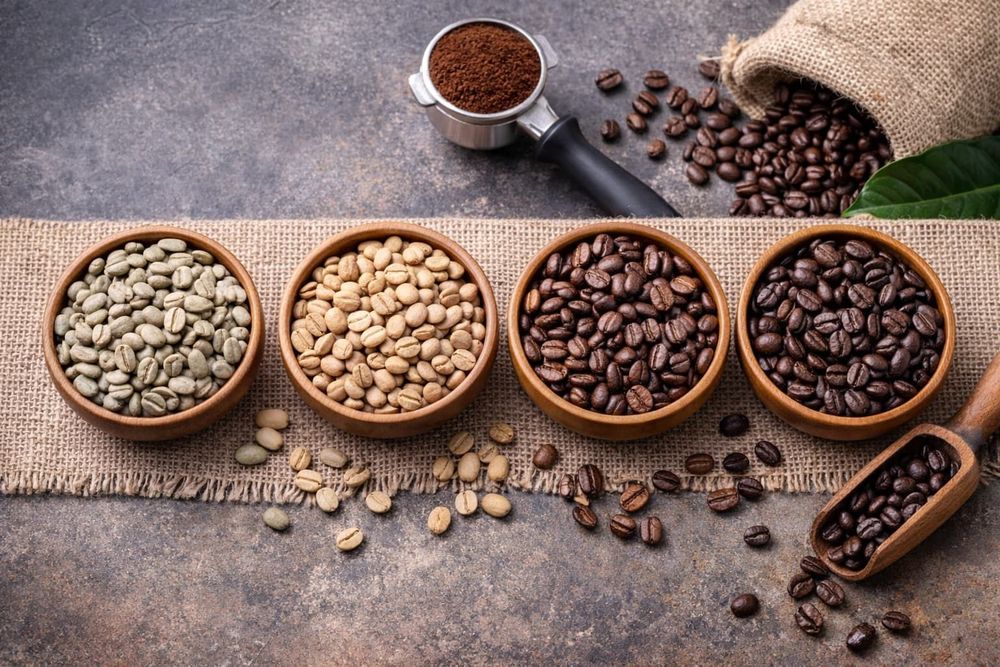
After processing, the beans are carefully dried until their moisture content reaches approximately 10–12 percent. They are then milled to remove the protective parchment layer, sorted by size and quality, and shipped as green coffee to roasters around the world.
Roasting is where the transformation truly happens. Green coffee contains hundreds of chemical compounds that react to heat through complex Maillard reactions and caramelization, creating the aromas and flavors associated with freshly brewed coffee. Depending on the roast profile, the same coffee can express notes of chocolate, caramel, citrus, berries, nuts, or floral blossoms.
From seed to cup, coffee is the result of years of cultivation, careful harvesting, precise processing, and skilled roasting. Every stage influences the flavor found in the final brew, making coffee one of the world's most fascinating agricultural products.